1000 Mental Health Journaling Prompts: A Guided Path to Self-Awareness and Growth
Starting a journaling practice often stops before it begins, stalled by the blank page. A structured resource like 1000 Mental Health Journaling Prompts removes that barrier. It is designed to support emotional well-being, self-awareness, and personal growth through guided questions. But a tool is only as effective as its user. Many people invest in such planners only to feel frustrated when results don’t match the effort. Let’s examine common missteps and how to use this resource correctly.
Treating Prompts as a Productivity Checklist
The most common mistake is treating the 1000 prompts as a task list. You might feel pressure to answer several per day or finish a section quickly. This turns journaling into another chore. How this affects growth: shallow answers. You miss the emotional core of a prompt about Healing Inner Work because you are focused on finishing it.
A better approach: Sit with a single prompt from the Emotional Awareness Check-Ins or Self-Love Self-Compassion sections. Write for a set amount of time, not a set number of prompts. Quality of reflection consistently outweighs quantity of words.
Ignoring the Themed Organization
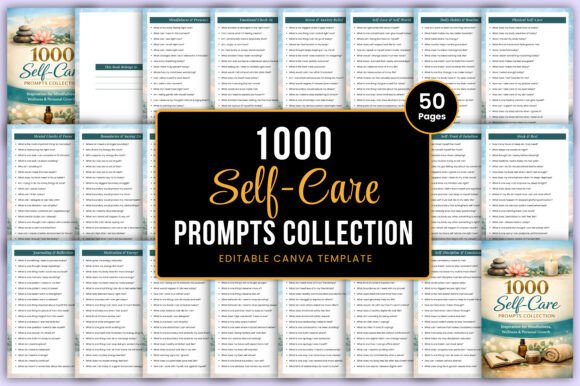
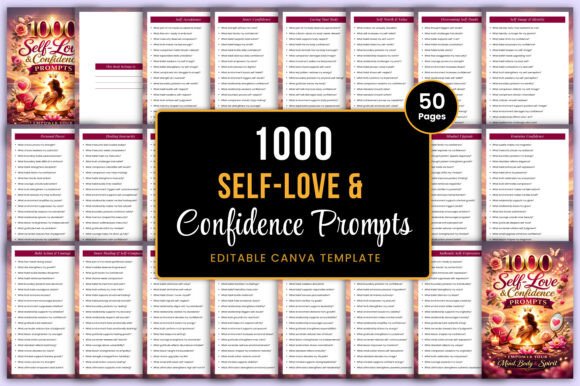
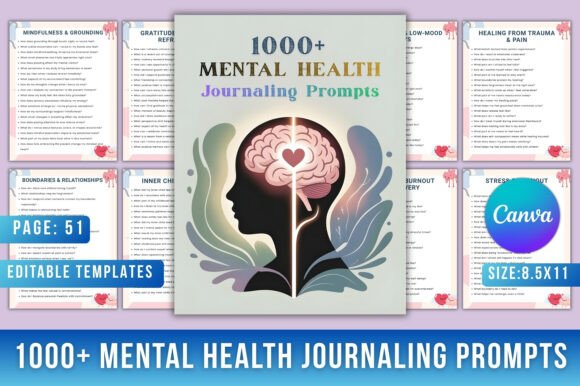
The planner is organized into distinct themes: Anxiety Overthinking Support, Stress Burnout Recovery, Depression Low-Mood Days, Boundaries Relationships, and Mindfulness Grounding. A common oversight is jumping around randomly. If you are in a state of burnout, forcing yourself to write positivity prompts can feel invalidating. How this affects usability: you conclude the journal “doesn’t work” for you. In reality, you are using the wrong section for your current state.
Practical advice: Assess your mood before opening the file. Use the themed sections strategically. Match the prompt to your present need. This ensures the journal meets you where you are, immediately increasing its relevance.
Expecting Immediate Transformation
A resource containing 51 pages and 1000 prompts can create an expectation of quick results. Mental health patterns—anxiety, depression, relational habits—are not resolved in a single journaling session. The consequence of impatience: abandonment. Users drop the practice because they don’t feel an immediate shift.
Corrective mindset: Consistency builds insight. Use the Gratitude Positive Reframing and Mindfulness Grounding prompts to build a gentle, sustainable habit. Five minutes, three times a week, will serve you far better than one marathon session per month. This is a long-term practice for self-awareness, not a quick fix.
Confusing Guidance with Rigidity
Some writers worry that answering specific prompts will box in their thoughts. They fear losing creative or emotional freedom. Why this is a misunderstanding: The prompts are starting points, not strict assignments. A question about Boundaries Relationships may lead you to explore a memory from childhood. Follow that thread.
How to use flexibility: The editable Canva link allows you to adjust the wording of any prompt to better suit your voice. You can skip prompts that don’t resonate today and return to them later. The structure exists to support you, not to confine you.
Overlooking the Technical Setup
This product is delivered as high-quality PDF files and an editable Canva link, formatted for 8.5X11 inches at 300 DPI with no bleed. Ignoring these details can ruin the experience. Common mistakes:
- Printing without checking scaling: results in cut-off text. Always select “Actual Size” or “100%” in your print dialog.
- Forgetting the Canva link: the editable version is ideal for digital users who want to type responses directly into the planner.
- Ignoring 300 DPI: printing at lower resolution makes the text fuzzy and reduces the professional feel of your journal.
Better practice: Test one page. Decide if you prefer handwriting (print a section) or typing (use the Canva link). Aligning the format to your natural habit removes friction and increases consistency.
Using Prompts in Isolation
Journaling is most effective when connected to a broader wellness routine. Writing about Anxiety Overthinking Support is valuable, but it becomes transformative when you apply those insights. The hidden cost: the journal becomes a venting ground rather than a catalyst for change.
How to integrate: After a session on Healing Inner Work, identify one small action. Did a prompt reveal a pattern of overcommitment? Move to the Boundaries Relationships section to plan a conversation. Share what you discover with your therapist or a trusted friend. Let the prompts inform real-world action.
Letting Volume Lead Your Decision
The appeal of 1000 prompts is strong, but volume without a plan creates overwhelm. The mistake: buying the resource without considering how it fits into your specific lifestyle. Are you a professional with limited time? A creator who prefers digital tools? Someone who benefits from deep, slow reflection?
Corrective action: Evaluate your habits. The structured, themed format works well for busy schedules because you can quickly find a relevant prompt. If you like physical writing, print the PDFs. If you prefer digital organization, use the editable Canva link. Matching the tool to your life ensures you will use it consistently.
The 1000 Mental Health Journaling Prompts is a carefully designed resource for emotional well-being and personal growth. By avoiding the traps of rushing, ignoring themes, expecting instant fixes, and overlooking setup, you turn a collection of questions into a true practice. Whether you are navigating Stress Burnout Recovery, cultivating Self-Love Self-Compassion, or working on Mindfulness Grounding, the value of this journal lies in how thoughtfully you engage with each prompt. Start small, use the themes wisely, and let the process guide you.