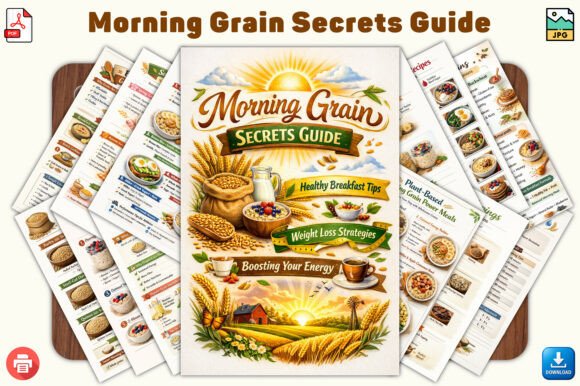
Morning Grain Secrets Guide
Starting the day with a breakfast that fuels both body and mind can feel like a guessing game—especially when you’re juggling work, family, or creative projects. That’s where the Morning Grain Secrets Guide steps in. It’s a clean, 31-page resource that breaks down how to turn humble grains into breakfasts that actually keep you energized, satisfied, and ready to tackle whatever comes your way.
This isn’t just another recipe book. It’s a practical blueprint designed for real mornings—whether you have five minutes or a full hour. The guide covers ancient grains, modern favorites, protein-rich combos, low-glycemic options, and plant-based choices. Every page is laid out in a 6×9 inch format that works just as well on your phone screen as it does printed on your kitchen counter.
Who benefits from this guide?
The beauty of this guide lies in its versatility. Different people pick it up for different reasons, and they all walk away with something useful. Here’s a look at who typically reaches for it—and why.
Health enthusiasts and home cooks
If you’ve ever stood in the cereal aisle wondering if anything there will truly sustain you until lunch, you’re the perfect audience. The guide helps you identify whole grains like farro, millet, amaranth, and teff—and shows you how to prep them in ways that don’t turn breakfast into a science experiment. You’ll learn which grains pair well with yogurt, nut milks, or eggs, and how to build a bowl that keeps blood sugar stable. One example: swapping refined oats for steel-cut oats or buckwheat groats can double the fiber and protein, making your 8 a.m. meal last well past noon.
Digital product sellers and marketers
If you sell printables, courses, or wellness resources, the Morning Grain Secrets Guide is a ready-made product you can offer as a lead magnet, bonus, or standalone item. The included JPG and PDF files are print-ready and formatted for immediate use. Many entrepreneurs have added it to their Etsy shops, Gumroad stores, or membership sites. Because it’s 31 pages with a clean interior, it appeals to buyers looking for “done for you” content they can customize or resell. For instance, a nutrition blogger might bundle it with a meal planner; a health coach might give it to clients as a starter guide.
Bloggers and educators
Creating weekly content about breakfast ideas can eat up hours of research and design time. This guide gives you a foundation you can build on. You can quote the sections on ancient grains, use the meal planning tips to write a comparison post, or share the low-glycemic options with your audience. Because the material is beginner-friendly yet detailed, it works for readers who are just starting to explore whole grains as well as those who’ve been cooking with quinoa for years.
Real-world applications: When and where it fits into daily life
The guide is designed for actual mornings, not Pinterest-perfect fantasies. Here are a few scenarios where it becomes a go-to resource.
The 5-minute weekday rush
You have coffee brewing and the kids need to leave for school in ten minutes. The guide’s “Quick 5-minute breakfast solutions” section gives you options like pre-soaked overnight groats or instant grain flakes that cook while you’re slicing fruit. One trick: using leftover cooked brown rice or quinoa from dinner as a base for a hot breakfast bowl. Just add milk and a pinch of cinnamon, and you have a warm meal in under two minutes.
The weekend meal prep session
Sunday afternoons often become kitchen marathons. The guide’s meal planning guidance helps you batch-cook a few grains that can be reheated throughout the week. For example, you can make a big batch of farro or sorghum, portion it into containers, and then each morning add different toppings—nuts one day, berries the next, a dollop of tahini or nut butter for protein. This approach cuts decision fatigue and ensures you actually eat what you planned.
The plant-based pantry overhaul
If you’ve recently shifted toward a plant-based diet, the guide’s section on plant-based and gluten-free choices becomes a lifesaver. It covers grains like amaranth, which is rich in iron and lysine, and teff, a tiny grain that packs calcium. You’ll find ideas for savory grain bowls with roasted vegetables and chickpeas, or sweet versions with coconut milk and mango. The guide doesn’t assume everyone eats the same way—it accommodates gluten-free, dairy-free, and sugar-conscious preferences without sacrificing flavor.
The weight management journey
People trying to manage their weight often skip breakfast or grab something processed because it’s quick. The guide addresses this with low-glycemic and weight-friendly options that keep you full longer. For instance, a bowl of barley with sautéed greens and a poached egg provides steady energy without a blood sugar spike. The digestion and metabolism tips also help you understand why certain grains (like millet) can aid digestion while others (like refined white rice) may not.
What to consider before using the guide
Jumping in without a little prep can lead to frustration—especially if you’re not used to working with whole grains. Here are a few things worth thinking about before you start.
Your current kitchen setup
Whole grains generally require a bit more cooking time than instant oatmeal or boxed cereals. The guide highlights quick-cooking methods, but you’ll still want a good pot, a strainer, and maybe a rice cooker or Instant Pot. If your kitchen lacks these basics, consider starting with the “quick 5-minute” ideas that rely on pre-cooked or pre-soaked grains.
Dietary restrictions and allergies
While the guide covers gluten-free and plant-based options, not every grain works for every restriction. For example, barley and rye contain gluten, so if you have celiac or severe sensitivity, focus on the sections dedicated to buckwheat, amaranth, quinoa, and millet. The guide does label these clearly, but it’s smart to read through the overview pages first to identify which sections apply to you.
Your taste preferences
Not everyone loves the nutty flavor of teff or the chewy texture of farro. The guide includes both sweet and savory inspirations, so you can experiment without committing to a whole bag of an unfamiliar grain. A good approach: pick two grains you’ve never tried before, buy small quantities, and make one savory bowl and one sweet bowl over the course of a week. That way you learn what you genuinely enjoy.
Digital vs. print use
The guide comes as JPG and PDF files, so you decide how to use them. For digital-only, you can read on your tablet or phone—great for referencing while cooking. If you prefer a physical copy, print the PDF at home or via a print shop. The 6×9 size fits neatly on a kitchen stand or in a binder. Keep in mind that the JPGs are best for online display or resale, while the PDF maintains the clean layout for printing.
How the guide’s features translate into real outcomes
Rather than listing bullet points, let’s look at what the design and content actually do for you.
The clean 6×9 inch layout means you can read a two-page spread without losing your place. The interior uses spacing and headings that make it easy to scan—perfect for mornings when you only have thirty seconds to find “low-glycemic” or “protein-packed.” The high-quality PDF preserves that clarity even when you zoom in on a mobile device.
Because the guide includes 31 pages, it covers enough depth without being overwhelming. You get explanations of ancient and modern grains, but each grain is summarized in a digestible paragraph. That means you can learn about emmer or spelt in one reading without needing to cross-reference other sources. The protein-packed breakfast ideas are not just recipes; they’re templates you can adapt based on what you have in your pantry. One page might show how to turn leftover quinoa into a warm breakfast pudding with dates and nuts; another might show how to use amaranth pop as a crunchy topping for yogurt bowls.
The section on boosting digestion and metabolism goes beyond generic advice. It explains which grains are easier to digest when sprouted or soaked, and how simple preparation tricks (like toasting before cooking) can enhance both flavor and nutrient absorption. This is the kind of practical insight that makes the guide useful long after you’ve read it.
For sellers and creators, the included JPG and PDF files save hours of design time. You can import the JPG into a preview image for your product listing, or use the PDF as a sample to build trust with buyers. Because the guide is formatted for both digital and print, you don’t have to worry about resizing or reformatting. Many users have reported that it sells well as a low-priced item that leads to higher-ticket offers, like meal plans or coaching programs.
Ultimately, the Morning Grain Secrets Guide is a tool that adapts to your life—not the other way around. Whether you’re a busy parent, a health coach, an Etsy seller, or someone who just wants to stop eating cold cereal every morning, it gives you a clear path forward. You don’t need to be a chef or a nutritionist. You just need to be willing to try one new grain this week.