Activities Workbook for Kids: A Practical Tool for Real Moments of Learning and Calm
It is three in the afternoon on a rainy weekday. The toys scattered across the floor no longer hold any appeal. The tablet battery is blinking red. You have heard the phrase “I am bored” twice in the last ten minutes. In moments like these, the instinct is to reach for a screen or to scramble for an activity that requires complicated setup and cleanup. Neither feels good.
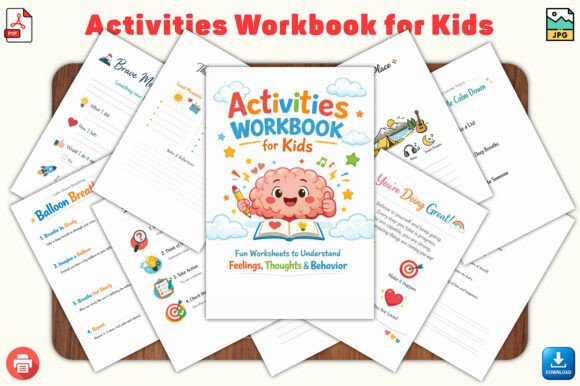
This is the exact space where a resource like the Activities Workbook for Kids becomes genuinely useful. It is not a flashy toy or a digital subscription. It is a straightforward, printable collection of 28 pages designed to give a child something meaningful to do. More importantly, it gives the adult in the room a break without guilt. The activities inside are built around thinking skills, emotional awareness, and creative expression. They are not busywork. They are small, structured moments of engagement that fit into the gaps of a regular day.
Who Actually Reaches for This Workbook?
Workbooks often sit on a shelf because they do not match how people actually live. This one works because it fits into several different routines without requiring extra effort from the adult. Understanding who uses it and why helps explain where it fits best.
The Homeschool Parent Looking for Rhythm
Homeschooling demands variety. A single curriculum can feel repetitive by Wednesday morning. Parents who teach at home need resources that slot into a morning basket or a quiet time bin without needing a lesson plan. The 6 x 9 inch size of this workbook makes it easy to tuck into a daily stack. The exercises that focus on emotional awareness and confidence building are especially useful at the start of a day. A child who takes five minutes to draw how they feel or to answer a simple prompt about their strengths enters the rest of their schoolwork in a better headspace. The parent gets a gentle, structured way to check in without turning it into a heavy conversation.
The Classroom Teacher Managing a Full Room
Elementary teachers rarely have extra time. When three students finish a math assignment ten minutes early, the teacher needs something that engages those students independently. Starting a whole new lesson is not an option. A simple, printable workbook page that asks a child to solve a thinking puzzle or draw a response to a prompt buys the teacher valuable minutes. The clean layout and kid-friendly fonts mean students can read and follow the instructions on their own. The same resource works well for a dedicated social-emotional learning block. The teacher can print a page on emotions and behavior, and the whole class can work through it together. It becomes a shared vocabulary for talking about feelings.
The Counselor or Therapist Building Trust
In a therapy setting, the first few minutes with a young child can be the hardest. Direct questions about feelings often lead to silence or one-word answers. A workbook page sitting on the table gives both the child and the counselor something to look at together. The prompts are non-threatening. A child who colors how their body feels or draws a picture of a safe place is communicating without pressure. The therapist gains insight simply by watching which crayon the child chooses or how much space the drawing takes up. The Activities Workbook for Kids becomes a quiet bridge between a child’s inner world and the adult who is trying to help.
Where It Fits Into a Normal Week
Understanding the product features is one thing. Seeing where it lands in real life is another. The value of this workbook changes depending on the setting.
In the Car and at Restaurants
Waiting is hard for children. A restaurant table or a long car ride creates restlessness. A 6 x 9 inch workbook is small enough to toss into a bag without taking up space. The clean white background and minimal design mean a child is not overwhelmed by visual clutter. They can open to a random page and start drawing, writing, or solving. The parent does not need to give instructions. The child owns the activity. This independence is valuable for building confidence. The child learns that they can entertain themselves with a piece of paper and their own imagination.
During Summer Break or at Daycare
Summer camps and daycare centers burn through printable activities quickly. Directors and caregivers need resources that are cost-effective, reproducible, and aligned with developmental goals. The PDF and JPG formats of this workbook make it easy to print individual pages as needed. A camp counselor can pull a creative prompt for an afternoon wind-down activity. A daycare provider can use a page on emotions during circle time. The workbook becomes a shared resource that multiple adults can use without training or preparation.
As Part of a Morning or Bedtime Routine
Parents who want a calmer morning or a gentler bedtime often struggle to find an activity that is low stimulation but engaging. A workbook page that asks a child to reflect or draw can act as a transition. Before breakfast, one page of creative prompts helps a child wake up their brain. Before bed, a simple drawing exercise winds down the energy. The structure gives the child a predictable anchor point. The parent gets a few minutes of quiet. That small pocket of time can change the tone of the whole day.
What to Think About Before You Start
Not every workbook works for every child or every situation. Being honest about the practical considerations helps an adult use this resource effectively instead of feeling frustrated.
- Age and reading level. The workbook is designed with kid-friendly fonts and clear headings. Some prompts assume the child can read simple sentences. For a pre-reader, an adult will need to sit with them and read the prompt aloud. This turns it into a guided activity rather than an independent one. That is fine, but it is worth knowing ahead of time.
- Printing versus binding. The PDF format gives flexibility. You can print single pages as needed, which is ideal for a teacher who wants ten copies of one activity. If you want a full book, printing all 28 pages and stapling or binding them creates a finished product that feels special. Consider whether you need a spiral binding for flat laying or a simple folder for organization.
- Time commitment per page. Some activities take five minutes. Others, especially the drawing prompts, can occupy a child for twenty minutes. This variety is a strength. It means the workbook works for short waiting periods and longer quiet times. If you expect every page to fill an hour, you will be disappointed. If you see it as a flexible tool, it delivers.
- The goal of the activity. Are you using this to teach a specific skill, to help a child regulate emotions, or simply to occupy time? The workbook supports all three, but the adult gets better results when they are clear about their intention. Using an emotional awareness page reactively after a tantrum works well. Using the same page as a daily check-in builds long-term habits. Both are valid, but they require different expectations.
What Makes the Layout Actually Work for Kids
A workbook can have good content and still fail if the design overwhelms the child. The choices made in this workbook are practical rather than decorative.
The clean white background is not boring. It is intentional. Children with sensory sensitivities or attention difficulties struggle when a page is crowded with busy graphics. White space lets the activity breathe. The child knows exactly where to look and what to do. The section boxes and clear headings guide the eye without needing an adult to explain the layout.
The balance between writing and drawing is another practical choice. A child who struggles with handwriting can still succeed by drawing. A child who loves words can write sentences. The same page works for both types of learners. This reduces frustration and builds confidence because the child is not blocked by a skill they have not mastered yet.
The prompts for thinking and problem-solving are not abstract riddles. They are grounded in things a child actually experiences. A page about emotions uses simple words and familiar scenarios. A child does not need to understand complex metaphors. They just need to recognize a feeling they have had before. This accessibility is what makes the workbook useful across different settings and age ranges.
A Note for Creators and Small Business Owners
For entrepreneurs building a brand in the parenting, education, or self-publishing space, this workbook represents a solid product foundation. The niche of screen-free, printable educational content is consistently in demand. Parents search for quiet activities. Teachers search for no-prep SEL resources. Counselors search for tools that open conversations without triggering resistance.
The product details matter here. The 6 x 9 trim size is a standard format that customers recognize and that prints cleanly. The KDP-friendly layout means you can take the PDF and publish it as a paperback without hours of reformatting. The inclusion of both PDF and print-ready JPG files gives flexibility for digital downloads or physical print-on-demand. For a blogger looking for a lead magnet, offering a few sample pages from this workbook builds trust with an audience of parents. For a small business owner running a daycare, purchasing the workbook means having a reproducible resource for every child in your care.
The value is not in the paper. The value is in the time it saves the adult and the engagement it offers the child.
The Quiet Value of a Simple Workbook
In a world full of bright screens and noisy toys, a printed page still holds a certain power. A child sitting with a crayon, thinking about a question, drawing a response, and turning the page to see what comes next is doing something deeply human. They are practicing focus. They are learning to name what they feel. They are building the habit of creative expression.
The Activities Workbook for Kids does not promise to raise test scores or fix behavior overnight. It does something simpler and perhaps more important. It fills a gap in a child’s day with something meaningful. For the parent who needs five minutes of calm, the teacher who needs a quick resource, the counselor who needs a way in, or the creator who needs a reliable product, it delivers exactly what it promises. It is a small tool that, when used consistently, supports real growth.