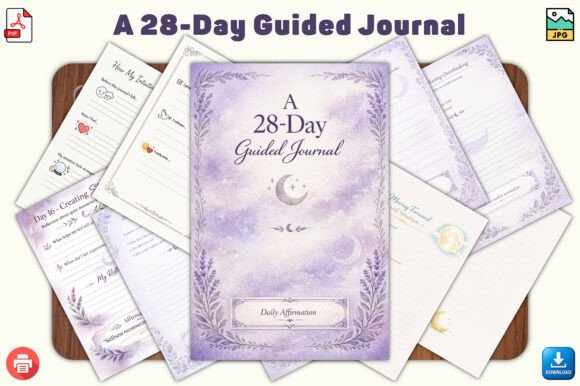
A 28-Day Guided Journal: Reconnect with Your Inner Voice
Finding a moment of quiet in a busy day can feel like a luxury. A 28-day guided journal offers a structured yet gentle way to pause, reflect, and rebuild trust in your own intuition. This isn't a rapid productivity tool or a rigid tracker. It's a soft space designed for daily mindfulness, emotional clarity, and personal growth. With 40 pages of guided prompts, affirmation sections, and calming watercolor aesthetics, it invites you to slow down and listen to yourself.
Whether you are creating this journal for personal use or as a product for others, understanding its full potential can help you get the most out of every page. Let's explore what makes this journal unique, how different people can use it, and practical ways to adapt it for various goals and platforms.
What Makes a 28-Day Guided Journal Different
Many journals focus on goal setting or habit tracking. This one centers on emotional clarity, self-trust, and intuition. The 28-day format is long enough to build a meaningful practice but short enough to feel achievable. Each day includes a guided prompt, a reflection space, and an affirmation box. This combination encourages both exploration and grounding.
The design matters too. Soft watercolor backgrounds, breathable layouts, and gentle decorative accents create a peaceful writing experience. There is no pressure to fill every line. Instead, the journal offers ample writing space and a consistent visual tone that feels calming and intentional. This makes it ideal for anxiety relief, mindfulness practice, or personal development work.
Creative Uses for Different Audiences
A 28-day guided journal is versatile. Different people can adapt it to suit their unique needs and contexts. Here are several ways various users can approach it.
For Personal Growth and Mindfulness Practice
If you are using the journal for yourself, treat the 28 days as a gentle commitment. Read the welcome page and set a simple intention. Maybe you want to feel more grounded or less reactive. Each day, spend five to ten minutes with the prompt. Write freely without worrying about grammar or structure. The affirmation section can be a anchor for difficult days. By the end of the month, you will have a clearer sense of your inner voice and how to trust it. The closing reflection pages help you integrate what you've learned and plan how to continue.
For Creators and Designers
If you are a designer or content creator, this journal can inspire your own product lines. Use the existing layout as a template for themed journals. You might create versions focused on gratitude, creativity, or career clarity. The watercolor aesthetic and consistent background style are easy to replicate or modify in different color palettes. Consider offering the journal as a printable PDF or a set of high-quality JPG files. You can also bundle it with other mindfulness products like guided meditation audio or digital wallpapers.
For Marketers and Bloggers
Bloggers and marketers can use the journal as a lead magnet, freebie, or paid product. The 28-day format works well for an email course or a content series. Each week, send subscribers a new set of prompts and affirmations. This builds anticipation and engagement. You can also create social media posts around specific themes from the journal, such as intuition or self-trust. Use quotes from the affirmation sections as visual content for Instagram or Pinterest. The soft, calming design appeals to audiences looking for wellness and personal development resources.
For Educators and Group Facilitators
Teachers, coaches, and workshop leaders can adapt the journal for group settings. Use it as a workbook for a four-week mindfulness or self-reflection course. Each session can focus on one week of prompts, with discussion and sharing time. The reflection and self-awareness exercises are especially useful for group dynamics. Participants can compare their experiences and support each other. The journal's breathable layouts make it easy to add notes or additional resources.
For Small Business Owners and Entrepreneurs
Running a business requires constant decision-making. A guided journal can help entrepreneurs reconnect with their intuition and reduce stress. Use the daily prompts to check in with yourself before making important choices. The affirmation sections can reinforce a positive mindset. The journal also works as an employee wellness resource. Provide it as part of a mental health initiative or a team-building activity. Its gentle approach makes it accessible for everyone, regardless of experience with journaling.
Practical Adaptations and Variations
The core structure of the journal is strong, but you can adapt it for different formats and platforms. Here are some ideas.
Digital and Printable Versions
Because the journal comes in high-quality JPG and print-ready PDF formats, you can use it both digitally and physically. For digital use, import the pages into a note-taking app like GoodNotes or Notability. Add text boxes or draw directly on the pages. This is great for people who prefer typing or want to save paper. For print, choose a paper size of 6 inches by 9 inches. The design already accommodates ample writing space, so it works well with most printers. You can also resize the pages to US Letter or A4 if needed, as long as you maintain the aspect ratio.
Thematic Variations
While the base journal focuses on intuition and mindfulness, you can create themed versions. For example, a 28-day gratitude journal would replace prompts with gratitude-focused questions. A creativity journal could include drawing prompts or brainstorming exercises. A career clarity journal might focus on values, skills, and goal setting. Each theme keeps the same watercolor aesthetic and affirmation boxes but tailors the content to a specific audience. This allows you to expand your product line without starting from scratch.
Bundle and Pairing Ideas
Combine the journal with complementary resources. Create a bundle that includes the PDF, a set of affirmation cards, a guided meditation script, and a printable habit tracker. Or pair it with a course on emotional intelligence or self-trust. The journal works well as a physical product, so consider selling it alongside a pen, a bookmark, or a calming candle. The key is to keep the aesthetic consistent so the bundle feels cohesive and intentional.
How to Keep Results Clear and Effective
Whether you are using or selling this journal, clarity and consistency matter. Here are practical recommendations.
- Use a consistent design language. The journal already has a consistent background style and soft color palette. If you create variations, keep the same fonts, accents, and tone. This builds brand recognition and a reliable user experience.
- Write with your audience in mind. If the journal is for stress relief, avoid corporate language. If it is for personal development, keep prompts open-ended and supportive. The affirmation sections should be encouraging without being prescriptive. Phrases like "I trust my inner guidance" or "I allow myself to rest" work well.
- Provide clear instructions. Include a welcome page that explains how to use the journal. Suggest a daily time, a comfortable space, and a simple ritual. For group use, add facilitator notes. For digital use, explain how to import and annotate.
- Keep the format adaptable. Offer the journal in both PDF and JPG formats. PDF is best for printing and preserving layout. JPG is easier for digital use and social media sharing. Make sure the file names are descriptive and organized by day or week.
- Test the user experience. Before publishing, print one copy and go through the entire 28 days. Note any confusing prompts, tight spacing, or missing elements. Adjust based on real use. This builds trust and quality.
Why Audience-Friendly Design Matters
A journal like this works best when it feels personal and accessible. The watercolor, calming spiritual design is more than decoration. It sets a tone of warmth and safety. Users should feel that the journal is a private space for honest reflection. Avoid cluttering pages with too many instructions or decorations. The breathable layout already gives each element room to breathe. When adapting the journal for different audiences, keep this principle in mind. Let the design support the content, not overwhelm it.
Final Thoughts on Building a Journal Practice
A 28-day guided journal is a tool for reconnection. Whether you use it for yourself, your audience, or your clients, the goal is the same: to create space for inner voice and self-trust. The daily prompts, affirmation sections, and reflection pages work together to form a gentle but effective practice. By the end of the month, the changes may be subtle but meaningful. You might find yourself pausing before reacting, listening more carefully to your own needs, or feeling more confident in your decisions.
If you are creating this journal as a product, remember that its value lies in its simplicity. People do not need more complexity in their lives. They need a quiet, beautiful place to land. Your job is to provide that space with intentional design, clear prompts, and a consistent aesthetic. Whether it is printed or digital, personal or commercial, a well-made journal can have a lasting impact.