ADHD Therapy Workbook for Adults
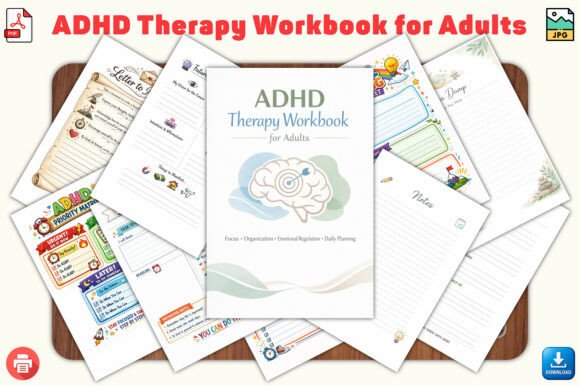
Living with ADHD as an adult often means juggling a hundred thoughts at once while struggling to finish even one task. The ADHD Therapy Workbook for Adults exists precisely for that reality. It is a 40-page printable resource designed not to fix you, but to meet you where you are. Whether you are a professional staring down a mounting to-do list, a creator wrestling with deadline anxiety, or an entrepreneur trying to build structure without losing creative energy, this workbook offers a practical, therapy-informed path forward.
Rather than promising quick fixes or perfection, the workbook leans into a more realistic goal: steady, manageable progress. Its pages blend self-reflection exercises, planners, trackers, and gentle prompts that help you understand your own patterns instead of fighting them. The entire layout is intentionally low-distraction and calm, built for a brain that already has enough noise.
What Makes This Workbook Different
ADHD resources often miss the mark by being too dense, too cheerful, or too rigid. This workbook takes a different approach. Every page is therapy-inspired, meaning the exercises are grounded in emotional regulation, cognitive reframing, and practical behaviour change. It is not a collection of generic motivational quotes—it is a structured tool you can actually use.
One of its strongest features is the emphasis on progress over perfection. That alone makes it more usable than most commercial planners. The worksheets are not punitive. The trackers do not demand consistency. Instead, you are gently guided to notice where you struggle, what helps, and what small adjustments might make tomorrow easier than today.
The design is minimal and clean. No bright colours competing for attention, no complex layouts that require a tutorial. The 6 × 9 inch format means it is compact enough to print and keep in a bag or binder, yet spacious enough for real writing and reflection. Whether you prefer working in a physical notebook or on a tablet, the included JPG and PDF formats give you flexibility.
What Is Inside the 40 Pages
The workbook covers the areas that matter most for adult ADHD management. Each section is built to be used independently, so you do not have to complete the book in order. You can jump to whatever feels relevant on any given day.
- Self-reflection worksheets that help you identify patterns in attention, mood, and productivity without judgement
- Daily and weekly focus planners that prioritise single tasks instead of overwhelming lists
- Task breakdown and time-blocking pages for turning vague projects into concrete next steps
- Distraction and procrastination trackers that reveal triggers rather than shaming the behaviour
- Emotional regulation and mood tracking to connect how you feel with how you function
- Habit and routine builders that start small and build gradually
- Anxiety and stress relief exercises grounded in therapy techniques
- Goal-setting and motivation pages that break ambitions into realistic actions
- Brain dump and notes pages for clearing mental clutter
- Weekly and monthly review sheets to track what worked without pressure
- Affirmations and self-compassion prompts that counter negative self-talk
Every page serves a purpose. Nothing feels like filler. That is a rare quality in workbooks of this kind.
In Professional and Entrepreneurial Settings
For professionals, entrepreneurs, and freelancers, the workbook addresses a common frustration: knowing what you need to do but being unable to execute consistently. The task breakdown pages are especially useful here. Instead of writing “launch marketing campaign,” you break it into concrete steps like write email draft, select images, schedule post, review analytics. This reduces the paralysis that often comes with vague responsibilities.
The time-blocking pages help you allocate focus periods in a way that matches your energy patterns rather than fighting them. If you know your best thinking happens between 10 AM and noon, you can block that time for high-focus work and leave admin tasks for the afternoon slump. The workbook helps you identify these patterns rather than imposing a one-size-fits-all schedule.
Distraction tracking becomes a diagnostic tool. Over a few weeks, you may notice that certain environments, times of day, or even specific tasks trigger more wandering. That information is gold for anyone trying to optimise their workflow without burning out.
For Creatives, Writers, and Content Makers
Creative professionals often struggle with the tension between inspiration and structure. The workbook does not try to over-organise your creativity. Instead, it offers brain dump pages for capturing ideas before they vanish, and weekly review sheets to see which projects actually deserve your focus. The self-compassion prompts are particularly helpful after a week where the creative flow just did not show up.
For bloggers, publishers, and educators who produce content regularly, the goal-setting pages help bridge the gap between your long-term vision and what you can realistically do today. You learn to set intention-based goals instead of outcome-based ones. That shift alone reduces the anxiety that comes from comparing yourself to others.
In Personal Life and Daily Routines
ADHD does not clock out at 5 PM. The workbook includes habit and routine builders that target everyday challenges: morning routines that actually stick, evening wind-downs that calm the brain, and simple tracking for things like hydration, movement, or sleep. The anxiety relief exercises are practical enough to use in moments of overwhelm, whether that is before a difficult conversation or after a stressful day.
The emotional regulation pages help you name what you are feeling without spiralling. That matters because ADHD often amplifies emotional reactions. By tracking mood alongside daily events, you start to see connections. A stressful meeting might lead to two hours of distraction. A skipped lunch might worsen irritability. Over time, these insights help you make adjustments before things escalate.
How to Use the Workbook Effectively
This is not a workbook you need to complete in a weekend. In fact, that approach would probably defeat its purpose. Here are a few practical considerations drawn from working with adults managing ADHD.
Start with one section. Pick the area that causes you the most frustration right now. If procrastination is derailing your projects, begin with the distraction trackers and task breakdown pages. If emotional overwhelm is the bigger issue, try the mood tracking and self-compassion prompts first. Build momentum in one area before adding another.
Print multiple copies of individual pages. The printable format is ideal for this. If you find the brain dump pages helpful, print ten of them. If the weekly review sheet clicks with your style, keep a stack ready. The workbook is a starting point, not a finite resource.
Pair it with existing tools. Many adults already use digital calendars, habit apps, or note-taking platforms. The workbook can complement these tools rather than replace them. You might use the reflection worksheets to clarify your priorities, then transfer key tasks into your digital planner. There is no need to choose between analog and digital—both can serve different purposes.
Use it irregularly. One of the biggest traps with ADHD resources is the assumption that you will use them every day. Realistically, you might go weeks without opening the workbook, then dive deep for three days straight. That is fine. The workbook is designed to be picked up and put down without guilt. The review sheets even help you reconnect after a gap by asking what changed and what still matters.
Who Will Benefit Most
While the workbook is titled for adults, it is especially suited for people in roles that demand both structure and flexibility. Marketers, educators, freelancers, small business owners, hobbyists, and remote workers all fit this description. If your day involves shifting between focused work, creative thinking, and administrative tasks, you will find the exercise pages directly applicable.
It also works well for adults who are already in therapy or coaching and want a tangible tool between sessions. The prompts align with common therapeutic approaches like cognitive behavioural therapy and mindfulness, making them a useful supplement rather than a replacement for professional support.
Design and Usability Observations
The visual style is worth highlighting because it directly affects usability. Many self-help resources use bright colours, decorative fonts, and busy layouts that inadvertently increase cognitive load. This workbook deliberately avoids that. The pages are clean, with plenty of white space, clear headings, and simple lines. The colour palette is calming and neutral. Nothing competes for your attention, which is exactly what an ADHD-friendly tool should offer.
The 6 × 9 inch size hits a sweet spot. It is small enough to carry without feeling bulky but large enough for comfortable handwriting. The PDF version works well on tablets with note-taking apps, especially if you prefer digital organisation. Having both JPG and PDF options also means you can insert individual pages into other documents or print them at different sizes if needed.
Final Thoughts on This Resource
The ADHD Therapy Workbook for Adults stands out because it treats ADHD not as a flaw to be fixed but as a different way of operating that can be understood and worked with. It offers structure without rigidity, reflection without judgement, and progress without pressure. For anyone who has tried conventional planners and found them frustrating, this workbook is worth exploring as a more realistic alternative.
It does not promise to cure your ADHD or transform your life overnight. What it offers is something rarer: a set of tools that actually respect how your brain works, paired with the quiet permission to use them imperfectly. And for many adults, that is exactly the kind of support that makes a lasting difference.