The Strategic Value of a Planner Bundle: Making Your Tools Work for You
Planners are everywhere. Open any productivity blog or walk through a stationery shop, and you will find countless options promising to organise your life. Yet most people abandon their planners within weeks. The problem is rarely the person and almost never the product. It is the absence of a clear reason for using it in the first place.
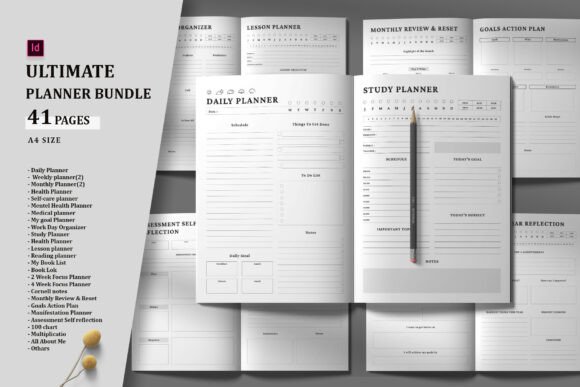
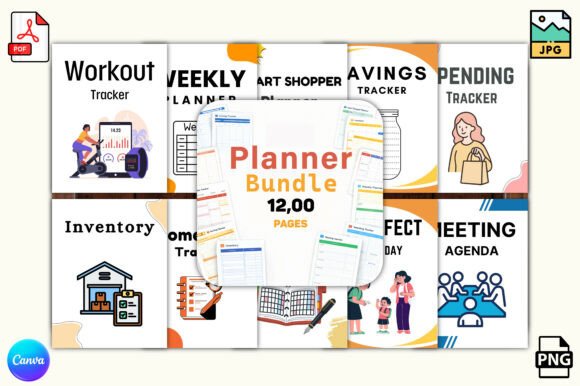
A Planner Bundle — especially one built around multiple specialised files — offers a different starting point. Instead of one generic layout trying to fit every task, you get distinct tools for distinct parts of your life. The 10 Planner Files Mega Bundle provides ten separate files, each with 120 pages, covering areas from daily planning to workout tracking. That breadth can be useful, but only if you approach it with strategy rather than enthusiasm.
This article is not a list of features. It is a practical look at how to decide whether a planner bundle makes sense for your context, how to use it without wasting time, and what to watch out for when you rely on structured formats for your goals.
Why a Planner Bundle Matters Beyond the Obvious
Most people think of planners as to-do lists with dates attached. That view underestimates what a well-structured set of files can do. When you have separate trackers for spending, inventory, homework, meetings, and savings, you are effectively building a small information system. Each page becomes a place where decisions are recorded, patterns become visible, and future actions can be based on past data rather than guesswork.
For entrepreneurs, freelancers, and small business owners, this is particularly relevant. Running a business without tracking spending, inventory, or meeting outcomes is like navigating without instruments. You might stay afloat, but you will not know why. A Planner Bundle provides the structure to capture that information in a consistent format. Over time, the pages become a reference you can return to, not a collection of forgotten notes.
For educators, creators, and professionals managing multiple responsibilities, the value is similar. The Homework Tracker and Meeting Agenda Planner in this bundle, for example, reduce the mental load of remembering every detail. When the structure is already there, you spend less energy organising and more energy doing.
The Hidden Cost of Planning Without Purpose
Here is a truth that is rarely mentioned: using a planner without a clear goal can actually reduce productivity. Pages filled with minor tasks can give the illusion of progress. You feel busy because you are writing things down. But busyness is not the same as effectiveness.
If you download a Planner Bundle with ten files and 1200 pages, the temptation is to print everything and fill it all. That approach almost always fails. You become a collector of empty pages rather than someone who uses planning to achieve real outcomes. The bundle is a tool, not a solution. It only becomes valuable when you decide what matters most and select the parts that serve that purpose.
The risk of using a bundle without clear context is that you spread your attention across too many areas. You track spending, workouts, daily tasks, inventory, and meetings all at once. But attention is finite. If everything is tracked, nothing is prioritised. The result is a fragmented system that feels thorough but delivers little direction.
How to Evaluate a Planner Bundle Before You Commit
Before you start printing or importing any file, step back and assess what you actually need. A bundle like the 10 Planner Files Mega Bundle includes a wide range of tools, but that does not mean you should use them all immediately.
Start by listing the areas of your life or work that currently cause friction. Do you often miss deadlines? The Daily Planner and Weekly Planner may be your starting point. Do you wonder where your money goes each month? The Spending Tracker and Savings Tracker become more relevant than any other file. Are you managing a small business with physical stock? The Inventory Tracker is not optional — it is essential.
This evaluation is not a one-time task. As your priorities shift, the files you use should shift as well. A Planner Bundle that offers multiple formats allows you to adapt without starting from scratch. That is the real advantage: flexibility within a consistent structure.
Matching Planner Types to Real-World Objectives
Let us walk through a few realistic scenarios to see how the files in this bundle can serve specific goals. These are not hypothetical examples. They are patterns that professionals, creators, and business owners encounter regularly.
Scenario 1: Freelancer managing cash flow
A freelancer often earns irregular income and pays uneven expenses. The Spending Tracker and Savings Tracker become the core of their financial planning. By using these files consistently for a few months, they can identify lean periods and plan accordingly. The Daily Planner helps structure work hours, and the Meeting Agenda Planner ensures client calls stay focused. In this case, the bundle supports both financial stability and time management without requiring a separate accounting tool.
Scenario 2: Small business owner managing inventory and operations
For someone running a product-based business, the Inventory Tracker and Smart Shopper Planner are directly tied to operations. Tracking stock levels manually might seem old-fashioned, but for small operations, it provides immediate visibility without the cost of complex software. The Meeting Agenda Planner helps keep team check-ins productive, and the Workout Tracker might seem tangential until you consider that business owners often neglect their health. Including a health-related file in the bundle is a reminder that long-term success depends on personal consistency as much as professional discipline.
Scenario 3: Educator or student balancing multiple courses
The Homework Tracker and Weekly Planner form a natural pair for anyone managing deadlines across multiple subjects. The Daily Planner breaks down large assignments into daily actions. The key is to use the trackers not just to list tasks, but to review them weekly and adjust priorities. Without that review, even the best planner becomes a static list rather than a dynamic tool.
Practical Ways to Integrate a Planner Bundle Into Your Workflow
Once you have identified your priority areas, the next step is integration. A Planner Bundle that provides JPG, PNG, and PDF formats offers flexibility in how you use it. Here are a few approaches that work in practice:
- Print and bind. Print only the files you need, bind them together, and treat the result as a custom journal. This works well for people who prefer handwriting and want a physical record. The 300 DPI resolution ensures the pages look clean even after printing.
- Use digitally on a tablet. Import the PNG or PDF files into a note-taking app like GoodNotes, Notability, or OneNote. This allows you to write, erase, and reorganise without wasting paper. The Planner Bundle becomes a reusable digital notebook.
- Combine both. Use printed pages for daily tracking and the digital version for reference or backup. This hybrid approach is common among professionals who want the tactile experience of writing but also need searchable records.
Whichever method you choose, consistency matters more than perfection. Using a planner for ten minutes every day produces better results than spending two hours on it once a week.
The Role of Quality and Consistency in Long-Term Use
Quality is not just about aesthetics. When a planner file is well-designed, with clear layouts and consistent formatting, you spend less time figuring out where to write and more time recording what matters. The 10 Planner Files Mega Bundle uses a standard print-ready page size and 300 DPI resolution. That may sound technical, but it translates to pages that look professional whether you print them at home or at a shop. If you plan to use the files over months, small design details matter because they reduce friction.
Consistency across the files also helps. When each file follows a similar visual language, switching between the Spending Tracker and the Weekly Planner feels natural. You are not relearning a new system every time you switch contexts. That seamlessness is often overlooked, but it is one of the main reasons people stick with a bundle rather than collecting unrelated templates.
When Digital and Print Planning Each Make Sense
There is no universal answer to whether digital or print is better. Each has trade-offs, and the right choice depends on your context.
Print planning works well when you want to avoid screen time, need a physical record, or find that handwriting helps you remember. It also works in environments where digital devices are not practical — during meetings, in workshops, or while travelling. The downside is that printed pages are static. You cannot search them, and once you fill a page, it stays as is.
Digital planning, using the PNG or PDF files in a note-taking app, offers searchability, infinite copies, and easy corrections. It is ideal for people who already work on tablets or who want to keep all their planning in one device. However, digital planning requires discipline to avoid distractions from notifications and other apps.
A Planner Bundle that offers both formats lets you experiment. Start with one approach, evaluate after a few weeks, and switch if needed. The bundle itself should not dictate your method — your habits should.
Building a System Around Your Planner, Not the Other Way Around
One of the most common mistakes people make is treating a planner as a complete system. No file, no matter how well designed, can replace the need for regular review, honest reflection, and clear priorities. The planner is a container. What you put into it and how you use it determines the outcome.
To make the most of this Planner Bundle, consider establishing a weekly review habit. Look back at what you recorded in the Daily Planner and Weekly Planner. Ask yourself what worked, what did not, and what needs to change. Use the Savings Tracker or Spending Tracker not just to record numbers, but to spot trends. The Meeting Agenda Planner should lead to action items, not just notes.
When you build a system around your planner — rather than expecting the planner to be the system — you turn a collection of files into a genuine decision-making tool.
Common Pitfalls and How to Avoid Them
- Using too many files at once. Start with one or two. Add more only when the current set becomes routine.
- Filling pages without reviewing them. Recording data is not the same as learning from it. Schedule time to review your entries weekly.
- Expecting the planner to motivate you. A planner is a structure, not a source of motivation. If you lack direction, no file will fix that. Clarify your goals first.
- Ignoring context. The same file works differently for different people. Adapt the layouts to your needs rather than forcing your needs into the layout.
Awareness of these pitfalls helps you use the bundle intentionally. The goal is not to fill 1200 pages. The goal is to make better decisions and achieve better results.
Making the Planner Bundle Part of a Broader Approach
Ultimately, a Planner Bundle like this one is most effective when it sits within a broader approach to personal and professional management. It complements, rather than replaces, the thinking you need to do about your priorities, your resources, and your definition of success.
For entrepreneurs and small business owners, pairing the financial trackers with regular profit-and-loss reviews strengthens your business operations. For creators and freelancers, using the daily and weekly planners alongside project milestones keeps creative work on track without stifling it. For educators and professionals, the homework and meeting trackers support the structure that learning and collaboration require.
The files themselves are neutral. Their value comes from how you use them, how consistently you apply them, and how honestly you review the results. That is true of any tool, but it is especially true of a bundle that offers ten different formats. The range is an opportunity, not a requirement.
If you approach this Planner Bundle with clear goals, a willingness to adapt, and a habit of regular review, you will get more from it than empty pages and good intentions. You will get a system that supports your actual work, your actual goals, and your actual life. That is what strategic planning is really about.