Shadow Work Prompts for Deeper Self-Understanding
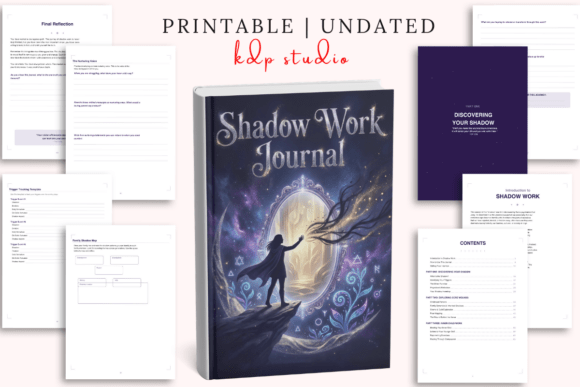
Self-reflection is a practice that many adults know they should prioritize, but few approach with a clear structure. Without direction, even well-intentioned introspection can feel vague or unproductive. That is where a guided resource like the Shadow Work Prompts Journal becomes genuinely useful. Designed as a printable workbook, it offers 300 thoughtfully organized prompts that help you explore hidden emotions, address limiting beliefs, and build emotional awareness over time. Whether you are new to personal development or have been journaling for years, having a curated set of questions to turn to can transform how you understand yourself and your reactions.
The Value of a Structured Prompt Collection
One of the greatest challenges in shadow work is knowing where to start. Without guidance, it is easy to skim the surface or avoid the topics that feel uncomfortable. A prompt-based journal removes that guesswork by offering specific, themed sections that each target a different layer of your inner world. The Shadow Work Prompts workbook covers emotional trigger awareness, inner child healing, self-sabotage patterns, boundaries, self-worth, anger awareness, guilt and shame reflection, control pattern awareness, and acceptance. Each section is designed to encourage honest reflection without judgment, helping you build awareness, compassion, and inner balance over time.
This structure matters for a practical reason: it saves mental energy. Instead of spending ten minutes deciding what to write about, you can open to a section that matches what you are feeling or experiencing. For example, if you notice yourself repeatedly reacting with defensiveness in conversations, the emotional trigger prompts can help you trace that reaction to its source. Over time, this kind of focused self-inquiry leads to clearer thinking and more intentional responses in daily life.
How Shadow Work Prompts Support Emotional Awareness
One of the most immediate benefits of working with shadow prompts is increased emotional awareness. Many adults operate on autopilot, reacting to stress, criticism, or uncertainty without fully understanding why. The prompts in this journal are organized to help you pause and identify the feelings beneath your reactions. The anger awareness section, for instance, does not simply ask "What makes you angry?" It guides you to explore how you express anger, what you might be avoiding, and how unmet needs show up as frustration. That kind of specificity turns a general emotion into a puzzle you can solve.
For professionals and entrepreneurs, emotional awareness is not just about personal wellbeing—it directly affects communication, leadership, and decision-making. A marketer dealing with creative blocks may discover that the real obstacle is a fear of judgment triggered by past criticism. A freelancer struggling with pricing may uncover a limiting belief about worthiness rooted in childhood experiences. The prompts offer a repeatable method for uncovering these patterns, which reduces the time spent spinning in confusion and increases your ability to move forward with clarity.
Practical Benefits for Daily Life and Work
While shadow work is often associated with deep emotional healing, its practical applications are equally valuable. The Shadow Work Prompts Journal includes sections on boundaries and emotional healing and self-worth strengthening, which directly impact how you interact with others and advocate for yourself. For example, a small business owner who struggles to say no to clients may find that the boundary prompts help them identify the fear of disappointing others and reframe it as a need for sustainable relationships. Similarly, a team leader who notices they take on too much responsibility might use the control pattern awareness prompts to explore why they struggle to delegate.
Another often overlooked benefit is the improvement in mental clarity and reflection. When you journal regularly with guided prompts, you create a habit of stepping back from reactive thinking. This can improve problem-solving because you are less entangled in emotional loops and more able to see situations objectively. For those in creative fields, like writers or designers, the inner child healing prompts can unlock a more authentic creative voice by addressing old fears of inadequacy or perfectionism. The journal does not promise to fix everything overnight, but it provides a reliable scaffold for the kind of habitual self-reflection that leads to gradual, meaningful change.
Who Benefits Most from This Approach
This workbook is well-suited for a wide range of adults. If you are someone who values structure and wants a clear path into shadow work, the organized sections make it easy to start without overwhelm. Therapists and coaches often recommend prompt-based journals as supportive exercises for clients, and this one covers many of the core themes that arise in therapy: guilt, shame, self-sabotage, and emotional healing. For people already in therapy, the prompts can complement sessions by deepening reflection between appointments.
At the same time, the journal is approachable enough for someone brand new to shadow work. The language is encouraging and non-clinical, and the prompts are designed to be gentle rather than confrontational. Beginners may appreciate that they can explore topics like acceptance or inner child healing at their own pace, using the PDF format to print pages as needed. For experienced practitioners, the 300 prompts offer fresh angles on familiar themes, helping to avoid the feeling of having "done all the work." One limitation to consider is that a structured prompt journal cannot replace the personalized guidance of a trained therapist, especially for those dealing with trauma or severe emotional distress. In such cases, the workbook can serve as a supportive tool alongside professional help, but not as a standalone treatment.
Integrating Shadow Work Into Your Routine
Consistency matters more than volume when it comes to shadow work. A practical way to use this journal is to pick one section per week and work through a few prompts each day. Because it is a printable PDF, you can keep a dedicated journal or binder and revisit your entries over time. This is particularly useful for noticing patterns—what you wrote about anger six months ago may look different after you have explored related prompts on control or self-worth. Tracking your progress in this way builds a richer understanding of your emotional landscape.
Another recommendation is to combine the prompts with a mindfulness practice. Before writing, take two minutes to breathe and set an intention for honesty without judgment. This helps create the calm, supportive space the journal is meant to provide. If a particular prompt feels too challenging, you can skip it and return later. The goal is not to complete every prompt in order, but to allow the journal to be a living document that grows with you.
What Makes This Resource Distinctive
Many shadow work resources exist online, but this workbook stands out for its intentional organization and breadth. It includes 300 prompts across multiple themes, from emotional trigger awareness to acceptance and shadow integration. The sections are not just a random list—they are sequenced to help you build awareness progressively. For example, the prompts on limiting beliefs and self-sabotage naturally follow the exploration of inner child wounds, because these patterns often stem from early experiences. This thoughtful structure saves you the effort of trying to connect the dots on your own.
Another distinctive feature is the inclusion of relationship shadow prompts and guilt/shame reflection. These are areas that many people struggle with but rarely have a safe space to explore. By providing specific questions around control patterns, boundaries, and self-worth in relationships, the journal helps you understand how your inner world affects your interactions with partners, friends, and colleagues. This can lead to more honest communication and healthier dynamics over time. For entrepreneurs, freelancers, and professionals who rely on collaboration and networking, these insights are directly applicable to both personal and professional life.
Considerations Before Choosing a Prompt Journal
While this journal is comprehensive, it may not suit everyone's learning style. Some people prefer freeform journaling or audio-guided reflection, and a prompt-based format might feel too directed for them. Others may find that 300 prompts feel overwhelming if they are not used to structured writing. In that case, it is wise to start with just one section—perhaps emotional trigger awareness or self-worth—and use only a few prompts per session. The PDF format allows for this flexibility because you can print only the pages you need.
It is also worth noting that no prompt book can account for every individual's history or nuances. The value lies in how you engage with the material. If you are looking for a tool that gently encourages honesty and helps you build a consistent practice of self-reflection, this workbook provides a solid foundation. For those who prefer a more visual or interactive approach, you might supplement the prompts with mind maps or art journaling alongside the written responses.
Final Thoughts on Using Shadow Work Prompts
Exploring your inner world is not a luxury—it is a skill that supports emotional resilience, clearer communication, and more authentic living. The Shadow Work Prompts Journal offers a structured yet gentle way to develop that skill, whether you are an entrepreneur navigating uncertainty, a creative seeking deeper inspiration, or simply someone who wants to understand themselves better. The combination of 300 organized prompts, themed sections on healing and awareness, and the printable PDF format makes it a versatile resource for both beginners and experienced practitioners.
What matters most is not how many prompts you answer, but the quality of attention you bring to each one. With consistent use, this journal can become a trusted companion for building awareness, compassion, and inner balance over time. It invites you to approach your hidden emotions and limiting beliefs with curiosity rather than judgment, and that shift alone can transform how you experience yourself and your relationships.