The 2026 Declutter Planner: A System for Intentional Living
Let’s be honest—decluttering is as much a mental challenge as it is a physical one. We hold onto things, tasks, and commitments that no longer serve us. Enter the 2026 Declutter Planner. This isn’t just a collection of pretty pages; it is a strategic framework designed to guide users from chaos to clarity. As a creator, coach, or entrepreneur, offering a resource like this positions you as a problem solver rather than just another seller. The difference between a generic planner and a transformative one lies in the structure, and this interior delivers exactly that.
The visual personality of this planner is what first catches the eye. It leans into modern minimalism with a warm, supportive tone. Generous white space, clean lines, and a consistent grid system define its character. There is nothing noisy or overwhelming about it—a crucial feature for a tool meant to reduce mental load. The layout respects the user’s cognitive capacity, making the act of planning feel lighter before a single task is written down.
Why Intentional Layout Shapes User Behavior
A tool’s design directly influences how often it gets used. The 2026 Declutter Planner interior uses visual hierarchy to guide action without friction. Headers are clear, task areas are distinct, and the flow from yearly overview to monthly planning to daily action feels natural. This isn’t accidental. Every element is placed to reduce decision fatigue.
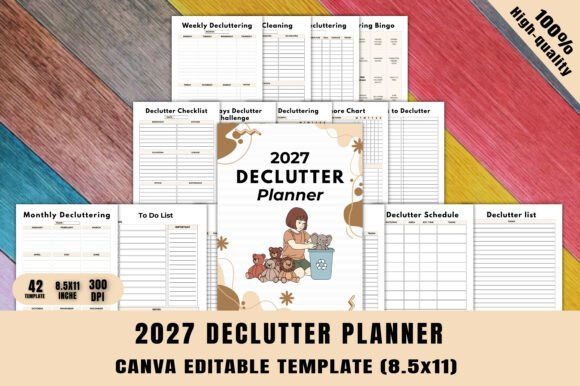
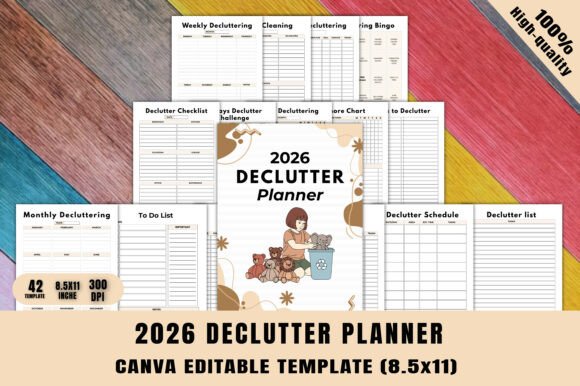
Notice how the “Discard List” sits alongside the “Items to Declutter” page. This creates an immediate action loop—identify an item, categorize its fate. It leverages behavioral psychology to keep users moving forward. The consistent layout across all 42 pages builds a sense of reliability. When a user opens the “Office Decluttering” section, they instinctively know how to interact with it because the visual language is familiar. That consistency is the hallmark of professional brand identity and thoughtful design assets.
Readability as a Form of Respect
Readability is often overlooked in planners. Designers who prioritize decoration over function create beautiful products that collect dust. This template gets the balance right. The typography is approachable yet structured, with enough contrast to support quick scanning. Whether someone is reviewing the “30-Day Declutter Challenge” or filling out the “Speed Cleaning Weekly” sheet, the information is immediately accessible. This lowers the barrier to starting, which is half the battle in habit formation.
Strategic Applications Across Creative and Commercial Projects
For business owners and content creators, the 2026 Declutter Planner is a versatile asset that adapts to multiple revenue streams. Its print-ready format makes it a standout KDP interior for Amazon publishing. The editable Canva template allows for deep customization, which is essential for sellers who want to match their existing brand colors and fonts without starting from scratch.
- Lead Magnets for Coaches and Organizers: Offer the “7-Day Declutter Planner” or “Decluttering Bingo” page as a free opt-in. These standalone assets build email lists fast because they provide immediate, actionable value.
- Digital Products on Etsy: The inclusion of JPG and PNG files means you can sell instant download items that need no additional formatting. The “Monthly Decluttering” and “Habit Tracker” pages are particularly popular as laminated reusable prints.
- Client Onboarding Kits: Professional organizers can bundle the room-specific pages—Garage, Playroom, Entryway—as take-home materials for clients. This extends the value of the service and reinforces the client’s commitment to the process.
- Content Upgrades for Bloggers: Turn the “Declutter Checklist” or “Declutter Schedule” into downloadable PDFs that complement blog posts about home organization or productivity. It transforms casual readers into engaged subscribers.
Because the source file is 100% customizable, you can strip out pages you don’t need, rearrange sections, or tweak the language to fit your target audience. This flexibility saves weeks of design time, allowing you to focus on marketing and customer engagement instead of layout logistics.
Evaluating the Template: A Creator’s Checklist
Before investing time in any template, it pays to evaluate how well it aligns with your project goals. Here is a practical checklist based on reviewing this 2026 Declutter Planner interior.
- Project Fit: Decide if you are selling a physical book on KDP, a digital download, or using it personally. The print-ready PDF is optimized for Amazon, while the Canva template is perfect for digital customization.
- Customization Ease: The Canva link is a major time saver. You can adjust colors, swap out fonts, and add your logo without learning complex software. This is ideal for entrepreneurs who don’t have a dedicated design team.
- Content Depth: Look beyond the number of pages. This planner includes 42 unique pages with real substance. The “30-Day Declutter Challenge” and “Decluttering Goal” pages offer depth that generic planners lack. They provide a journey, not just a list.
- Print Quality: High-resolution output (300 DPI) is non-negotiable for physical books. This template delivers crisp lines and professional-grade formatting that meets KDP’s technical requirements.
- Licensing and Usage Rights: Always confirm commercial licensing for KDP and Etsy. This planner is designed for resale, meaning you can use it as a core product or a bonus without legal headaches.
Real-World Examples That Build Trust and Engagement
The strongest products are those that demonstrate an understanding of the user’s real life. The “Decluttering Bingo” page is a perfect example of gamification done right. It turns a mundane chore into a rewarding game, encouraging users to complete more tasks than they otherwise would. This kind of creative engagement builds positive associations with your brand.
Similarly, the “Speed Cleaning Weekly” layout shows empathy for the user’s time constraints. It acknowledges that most people are not professional organizers—they just need a fast, efficient system to maintain order. By respecting their schedule, the planner earns their trust. This trust translates directly into brand loyalty and repeat purchases.
Another standout is the “Thank You Page.” Including this in a digital product or printed book signals completeness and gratitude. It closes the customer journey on a positive note, increasing the likelihood of positive reviews and word-of-mouth referrals. Small touches like this separate premium products from amateur offerings.
How Customization Strengthens Your Brand Identity
Branding is about creating a consistent emotional experience. When you customize the 2026 Declutter Planner with your chosen color palette and logo, every page becomes a brand touchpoint. A user who sees your signature colors on the “Declutter Habit Tracker” and again on the “To-Do List” begins to associate your brand with reliability and clarity.
This visual consistency builds recognition. If you are a productivity coach, your content on Instagram, your email templates, and your planner should feel like they belong to the same family. This template gives you the structural foundation to do exactly that. You are not starting from a blank canvas; you are working with a professional framework that already has strong bones.
From a marketing standpoint, a well-branded planner also stands out in the crowded KDP and Etsy marketplaces. Buyers are drawn to clean, cohesive aesthetics. A planner that looks organized itself is the best advertisement for what it promises to deliver.
Design Observations for Long-Term Success
In a saturated digital marketplace, depth beats breadth. A planner that looks good but lacks substance will generate refunds and negative feedback. The 2026 Declutter Planner passes the depth test because it covers the full range of the decluttering journey. From upfront goal setting (“Decluttering Goal”) to execution (“Fix, Replace, Throw Out”) to habit maintenance (“Monthly Maintenance”), it completes the loop.
The inclusion of room-specific pages (Garage, Playroom, Office, Entryway) is a strategic design choice. It allows users to tackle their environment systematically, reducing overwhelm. Each page feels like a mini session with a professional organizer, which raises the perceived value of the product.
For creators, the ultimate recommendation is to use the template yourself before selling it. Print it out, fill in a few pages, and experience the flow firsthand. You will discover natural selling points that you can highlight in your product descriptions. Your genuine enthusiasm will translate into better marketing copy and higher conversion rates.
Planning should not feel like a chore. With the right system, it becomes an act of self-care and that is the real value this planner brings to the table.