The 500 Storytelling Prompt Handbook: A Creative Writing Planner That Unlocks Your Imagination
Every writer knows the feeling. You sit down at your desk, open a blank document, and… nothing. The cursor blinks mockingly. The page stays white. Writer's block has arrived, and it feels like it's here to stay. If this scenario sounds familiar, you are far from alone. Professional authors, students, and hobbyist writers all encounter creative dry spells. The good news is that there is a practical, joy-filled solution. The 500 Storytelling Prompt Handbook is a comprehensive creative writing planner designed explicitly to spark imagination and help you push past that frustrating block. Packed with over 500 thoughtfully crafted prompts, this guide provides immediate fuel for your creativity, offering story beginnings, character creation tools, plot development ideas, world-building inspiration, and genre-based concepts. It is more than just a list of ideas—it is a structured companion for anyone who wants to write consistently and with confidence.
What Exactly Is the 500 Storytelling Prompt Handbook?
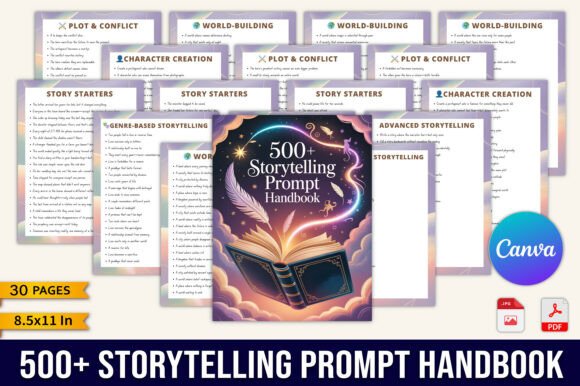
At its core, this handbook is a deliberate, structured resource for generating original writing. Unlike a random list of writing ideas you might find online, this planner is carefully organized to guide you through every stage of the storytelling process. It is built on the understanding that writer's block often stems not from a lack of talent, but from a lack of direction. The handbook removes that uncertainty by presenting over 500 prompts divided into clear, purposeful categories: story starters, character creation tools, plot conflict ideas, world-building inspiration, genre-based prompts, and advanced storytelling challenges. Whether you are outlining a novel, drafting a short story, or simply warming up your creative muscles, you will find a prompt that meets you exactly where you are.
Who Is This Creative Writing Planner For?
The handbook is designed for a wide audience. Writers at every level will benefit from its structured approach. Beginners often struggle with the question "Where do I start?"—the handbook answers that directly by giving them a first sentence or a character trait to explore. Experienced writers can use the genre-based prompts and advanced challenges to break out of creative ruts or to explore styles and genres they rarely attempt. Students will find it a valuable tool for classroom assignments, journaling, or creative projects. Educators and teachers can use the prompts as daily warm-ups, homework assignments, or group activities that stimulate discussion and narrative thinking. The handbook fits seamlessly into writing workshops, homeschooling curricula, and even therapeutic writing settings where self-expression is the goal.
Key Features That Make This Handbook Essential
Let's break down the core features of the 500 Storytelling Prompt Handbook and explore how each element supports your writing journey. Every feature has been deliberately included to serve a specific creative need.
500 Writing Prompts: More Than Just a Number
The sheer quantity of prompts ensures you will never run out of material. But what truly matters is the variety and intentionality behind each one. These are not generic fillers. Each prompt is designed to push you toward a specific storytelling skill—whether that is creating tension, developing a believable character voice, or building a vivid setting. You can work through the prompts sequentially, or you can jump to the category that matches your current project's needs. The handbook is built for flexibility.
Story Starters: Your Instant Gateway to a New World
Sometimes the hardest part is the first sentence. The story starters section provides compelling opening lines, intriguing situations, and mysterious scenarios that immediately place you inside a story. For example, you might encounter a prompt like: "The letter arrived on a Tuesday, but it was dated forty years ago." From there, your brain naturally begins asking questions: Who sent it? Why was it delayed? What secret does it reveal? The story starter handles the blank page problem so you can dive straight into the narrative flow.
Character Creation Tools: Building People Readers Care About
Great stories are driven by memorable characters, but creating a fully realized person on the page takes practice. The character creation prompts in this handbook go far beyond basic traits like hair color or job title. They invite you to explore a character's deepest fears, hidden desires, contradictory behaviors, and defining memories. One prompt might ask you to describe a character who always tells the truth except about one specific thing. Another might ask you to write a scene where a character's greatest strength becomes their downfall. These character creation tools help you build layered, believable people that readers will remember long after they finish your story.
Plot Conflict Ideas: The Engine of Every Story
Conflict is what keeps readers turning pages. Without tension, a story feels flat. The plot conflict ideas in the handbook cover a broad range of tensions—internal vs. external, interpersonal vs. societal, moral dilemmas vs. survival threats. You will find prompts that challenge characters with impossible choices, that pit friends against each other, and that force protagonists to question everything they believe. These prompts are designed to spark plot structures that are emotionally resonant and structurally sound. They are perfect for brainstorming your next chapter or for breaking through a stalled middle section of a novel.
World-Building Inspiration: Creating Settings That Feel Real
Whether you write fantasy, science fiction, historical fiction, or contemporary realism, the world your story inhabits matters. The world-building prompts help you think about geography, culture, politics, technology, history, and daily life in the worlds you create. Instead of simply describing a castle or a spaceship, these prompts ask you to consider: What do people eat here? What do they fear? What traditions do they observe? What secrets does this place hold? By answering these questions, you build a setting that feels lived-in and authentic, giving your readers a rich environment to explore alongside your characters.
Genre-Based Prompts: Writing Across Many Worlds
One of the most exciting features of this handbook is its genre-based focus. You will find prompts specifically tailored for fantasy, science fiction, mystery, thriller, romance, historical fiction, horror, and literary fiction. This diversity allows you to stretch your creative muscles in unexpected ways. A romance writer can try their hand at a sci-fi prompt, discovering new narrative techniques that enrich their primary genre. A horror writer can explore the pacing of a mystery. By moving between genres, you build a versatile skill set and keep your writing fresh and exciting.
Advanced Storytelling Challenges: For When You Want to Level Up
For writers who want to push their boundaries, the advanced challenges section offers complex, multi-layered prompts that combine several storytelling elements at once. These might involve writing a story in a specific structural format (like a frame narrative or a non-linear timeline), combining two incompatible genres, or developing a story from an unusual point of view (such as an object or a secondary character). These challenges are ideal for experienced writers who want to experiment with craft or for classroom settings where deeper analysis is the goal.
How the Handbook Fits Into Modern Creative Life
In today's busy world, we often struggle to carve out time for creativity. The creative writing planner is designed to fit into your life, not the other way around. You can use it for a five-minute warm-up before work, a ten-minute journaling session during lunch, or a deep two-hour writing session on the weekend. The prompts are quick to access and require no elaborate setup. Simply open the handbook, choose a prompt, and start writing. The included notes pages also allow you to track your progress, capture ideas for future projects, and reflect on how your writing is developing over time.
Practical Ways to Use the Handbook Daily
Here are several practical approaches that writers, students, and educators have found effective:
- Daily warm-up: Pick one prompt each day and write for 10–15 minutes. This builds a consistent writing habit without pressure.
- Project brainstorming: When starting a new story, scan the character creation and plot conflict sections to generate core ideas.
- Classroom icebreakers: Teachers can use story starters as group activities where students share their opening paragraphs aloud.
- Overcoming a mid-story slump: If you're stuck on a particular chapter, find a prompt that relates to your current scene and write an alternative version.
- Exploring a new genre: Dedicate a week to genre-based prompts outside your comfort zone to expand your skill set.
Common Misunderstandings About Writing Prompts
Some writers worry that using prompts somehow makes their work less original. This is a misconception. A prompt is not a command; it is a springboard. Two writers who use the same prompt will produce wildly different stories because their unique perspectives, experiences, and voices shape the outcome. The prompt simply opens the door. The imagination does the rest. Another misunderstanding is that prompts are only for beginners. In reality, many professional authors use prompts as warm-ups, as exercises to explore new techniques, or as sources of inspiration when they are between projects. Think of the handbook as a gym for your creative muscles—you use it to stay fit, no matter your current level of skill.
What's Included in the Files
The 500 Storytelling Prompt Handbook comes with a complete package designed for both digital and print use. You will receive:
- Editable Canva link: Fully customizable templates so you can add your own prompts, adjust layouts, or create personalized versions for your students or writing group.
- High-quality, ready-to-upload PDF files: Print-friendly, professionally formatted files that you can upload to platforms like Amazon KDP, Etsy, or your personal print shop.
- 30 different Canva templates: A wide variety of designs, including cover templates and interior page layouts, giving you flexibility to create a product that fits your brand or personal aesthetic.
- Page size 8.5×11 inches: Standard letter size, perfect for easy printing, binding, or digital reading on tablets and computers.
- Notes pages included: Space for you to record your thoughts, expand on prompts, and track your writing progress over time.
This combination of editable and ready-to-use files means you can start writing immediately, or you can customize the planner to suit your specific needs. Whether you are creating a personal writing journal or a product to sell to other writers, the included resources make it simple to get started.
Why This Handbook Works for Overcoming Writer's Block
Writer's block often thrives on perfectionism and the fear of writing something "bad." The handbook sidesteps this trap by giving you a low-stakes entry point. You are not trying to write a masterpiece; you are responding to a prompt. The pressure is off. Once the words start flowing, momentum builds, and the creative engine warms up. The structured categories also help you identify what kind of block you are experiencing. Are you stuck on a character? Use the character creation tools. Is the plot feeling aimless? Try a plot conflict prompt. By targeting the specific source of your block, the handbook offers a precise, effective remedy instead of a generic solution.
Final Thoughts: Your Creative Companion Awaits
The 500 Storytelling Prompt Handbook and creative writing planner is more than a collection of ideas—it is a reliable, structured partner for your writing life. It meets you where you are, whether you are a beginner looking for your first story idea or an experienced author seeking fresh inspiration. With its 500 prompts, character creation tools, plot conflict ideas, world-building inspiration, genre-based exercises, and advanced challenges, it provides everything you need to write with confidence and joy. The included editable Canva templates, PDF files, and notes pages make it easy to use, adapt, and share. Writer's block may be a common challenge, but with the right tools at your side, it is one you can overcome again and again—starting today.