Why a Kids Sketch Book Planner 100 Pages PDF Is the Perfect Tool for Creative Growth
Children thrive when they have space to imagine, but they also benefit from gentle structure. Blending these two elements can feel like a puzzle for parents, educators, and caregivers. A Kids Sketch Book Planner 100 Pages PDF offers a simple, flexible solution that respects a child's need for free expression while introducing them to the basics of daily planning. Unlike rigid notebooks or blank sketch pads that offer only one function, this digital resource combines drawing space with organizational prompts—all in a single printable file.
The idea is straightforward: give kids a place to sketch what they see, feel, and dream, while also encouraging them to note what matters for the day ahead. The result is a tool that supports both creative development and executive function skills, all wrapped in an engaging, reusable format. Whether you’re a parent looking for a screen-free activity or a teacher building a classroom routine, this planner adapts to many settings without feeling like a chore.
What Makes This Sketch Book Planner Distinctive
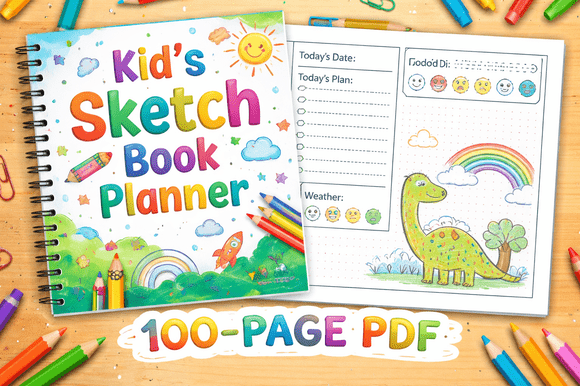
At first glance, a 100-page planner might seem like a lot for a young child. But when you flip through the pages, the thoughtful design becomes clear. Each page integrates three core elements that work together seamlessly:
- Daily plan section where children can jot down or draw their priorities, activities, or goals for the day
- Mood and weather tracker that encourages observation and emotional awareness
- Dot-grid sketch space that provides a flexible canvas for drawing, doodling, or practicing letters and patterns
This combination turns every page into a mini-adventure. A child might start by noting the weather outside, then sketch what they saw on a walk, and finally check off a small task they completed. Over time, these small actions build habits of reflection, planning, and creative expression.
The dot-grid format is especially valuable. Unlike blank pages that can feel intimidating or lined pages that constrain drawing, dot grids offer subtle guidance. Children can use the dots as reference points for shapes, letters, or even simple math activities. It’s the kind of design that supports multiple learning styles without overwhelming the user.
Practical Benefits for Parents and Educators
One of the strongest appeals of a Kids Sketch Book Planner 100 Pages PDF is its reusability. Because it’s a digital download, you can print individual pages as needed or bind the entire document into a workbook. This makes it suitable for:
- Homeschooling families who want a consistent daily activity that blends art and life skills
- Art teachers looking for a structured sketchbook that also encourages journaling
- Therapists or counselors who use drawing and mood tracking to help children express emotions
- Parents seeking a productive, low-prep activity for rainy afternoons or quiet time
The US Letter size (8.5 x 11 inches) is another practical advantage. It fits standard printers and binders, and the generous page dimensions give children plenty of room to spread out their ideas. You can even print two pages per sheet for a smaller format that’s easier to carry on trips.
Building a Routine Without Rigidity
Children often resist activities that feel like schoolwork. The beauty of this planner is that it doesn’t present itself as a lesson. The daily plan section is simple enough that a child can fill it in with a word, a picture, or even a sticker. There’s no pressure to write in complete sentences or follow a strict format. Over time, you might notice your child naturally expanding their entries—perhaps adding a small note about what they enjoyed that day or sketching a favorite memory.
The mood and weather tracker adds a layer of emotional intelligence. By asking children to observe and record how they feel and what the weather is like, you invite conversation about cause and effect, seasons, and personal well-being. It’s not uncommon for kids to start noticing patterns: “I feel happy on sunny days” or “I feel calm when I draw.” These small insights are valuable for both children and the adults who care for them.
Creative Applications Beyond the Obvious
While the planner is marketed as a sketch book and daily organiser, its versatility extends far beyond those two uses. Here are some examples of how families and educators have adapted it:
Art practice and skill building. The dot-grid pages are ideal for practicing shapes, patterns, and lettering. A child learning to write can use the dots as guides for forming letters. An older child might use them to practice calligraphy or create geometric art. The planner becomes a low-pressure space to experiment with new techniques.
Nature journaling. Take a few printed pages on a walk or trip to the park. Children can sketch leaves, clouds, or insects they find, then note the weather and their mood. This turns the planner into a nature diary that connects observation with creativity.
Storyboarding and comics. For kids who love telling stories, the dot-grid pages work well for drawing comic strips or storyboards. The grid helps maintain consistent panel sizes while still allowing freehand drawing.
Classroom morning work. Teachers can print a class set of pages for students to complete as they settle in each morning. The combination of planning, sketching, and mood tracking provides a calm, focused start to the day. It also gives teachers insight into how each student is feeling.
Supporting Different Age Groups and Abilities
One question parents often ask is whether the planner suits a wide age range. The answer is yes, but with some tailoring. For younger children ages four to six, the daily plan section might become a drawing area, while parents or teachers help with writing. The mood tracker can be as simple as circling a face or colouring a symbol. The dot-grid space remains open for whatever the child wishes to create.
For older children ages seven to twelve, the planner can serve as a genuine organizational tool. They can list homework tasks, after-school activities, or personal goals. The sketch area becomes a place for more detailed drawings, mind maps, or even rough drafts of creative writing. The planner grows with the child, adapting to their developing skills and interests.
This flexibility is one reason the Kids Sketch Book Planner 100 Pages PDF works well in mixed-age settings like homeschool groups or art classes. Each child can use the same page in a way that matches their ability level, which reduces the need for multiple resources.
Considerations Before You Download and Print
Before you commit to using this planner with your child or students, there are a few practical factors worth considering. First, think about how you’ll bind or store the pages. Options include three-ring binders, spiral binding at a print shop, or simple stapling. Some families prefer to print a few pages at a time and keep them in a folder.
Second, consider the paper type. While standard printer paper works fine, thicker paper might be better if your child uses markers or wet media. You can also print on mixed-media paper if you want to expand the creative possibilities.
Third, decide how often you’ll use the planner. Daily use helps build routine, but even using it a few times a week provides value. The 100-page count gives you plenty of flexibility without pressuring you to fill every page.
Finally, involve your child in the setup process. Let them choose a cover design or decorate the first page themselves. When children feel ownership over a tool, they’re more likely to use it consistently and with enthusiasm.
How This Planner Fits Modern Lifestyles
In an era of screens and digital schedules, a paper-based planner might seem like a step backward. But many parents are discovering that analog tools offer unique benefits for children. The act of drawing, writing, and physically turning pages engages different cognitive pathways than tapping a screen. It also provides a screen-free break that can improve focus and reduce overstimulation.
The Kids Sketch Book Planner 100 Pages PDF fits easily into modern routines because it’s digital to download but physical to use. You don’t need to wait for shipping or worry about running out of pages. Print exactly what you need, when you need it. This hybrid approach appeals to families who value both convenience and hands-on creativity.
Moreover, the planner supports a growth mindset. Each page offers a fresh start. There’s no pressure to be perfect—just space to try, explore, and improve. Children learn that planning and creating are skills they can develop over time, not fixed talents they either have or don’t.
Observing the Impact Over Time
One of the most rewarding aspects of using a planner like this is watching a child’s progress across multiple pages. Early entries might be simple scribbles or basic lists. Later pages often show more detail, improved motor control, and greater self-awareness. Children start to develop preferences for certain drawing tools, colours, or page layouts. They might begin using the planner without being reminded, which is a sign that it has become a meaningful part of their routine.
Teachers who use the planner in classroom settings often notice that it helps quiet or anxious students find a voice. The combination of drawing and private journaling gives shy children a way to express themselves without the pressure of speaking in front of others. Over time, some of these students become more willing to share their drawings or discuss their mood with the class.
Parents also report that the planner opens conversations they might not otherwise have. A child who draws a stormy sky on a sunny day might be struggling with something. A child who always draws the same happy scene might be processing a positive experience. The planner becomes a window into a child’s inner world, offering clues that adults can gently explore.
Final Thoughts on Making the Most of This Resource
A planner, no matter how well designed, is only as valuable as the habits it supports. The Kids Sketch Book Planner 100 Pages PDF provides a flexible framework, but the real magic happens when adults encourage children to use it in ways that feel natural and enjoyable. Let go of the idea that every page must be filled perfectly. Allow scribbles, half-finished drawings, and skipped sections. The goal is not a pristine portfolio but a lived-in space where creativity and structure coexist.
If you’re considering adding this planner to your toolkit, start by printing a handful of pages and using them together with your child. Observe what they gravitate toward—the drawing space, the mood tracker, or the planning section—and let that guide how you introduce the rest. You might be surprised at how quickly a simple page becomes a springboard for imagination, reflection, and even a little bit of organisation.